Baby Monkey Monogram
First Impressions: Whimsy That Doesn’t Overwhelm
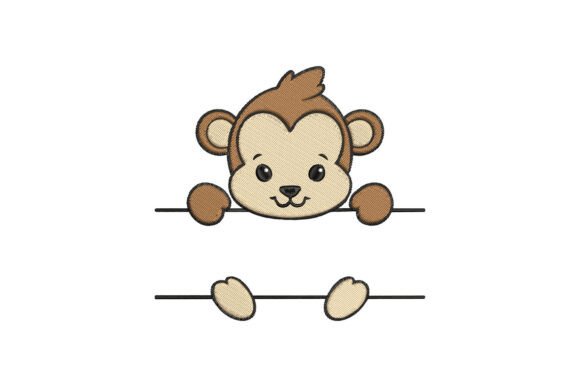
When I opened the Baby Monkey Monogram file, what struck me first wasn’t cuteness—it was balance. The monkey motif sits comfortably within the monogram’s structure, not crowding the letters or shrinking into insignificance. It’s playful without tipping into cartoon overload—just enough curve in the tail, just enough softness in the facial features to feel handmade, not mass-produced. As a designer who’s stitched hundreds of monograms for baby blankets, boutique totes, and personalized sweatshirts, I appreciate how this one avoids visual clutter. It breathes. That matters—especially when you’re stitching on a curved surface like a cap brim or a rolled towel edge.
A Real-World Test: Stitching It on a Linen Tea Towel
Last week, I used Baby Monkey Monogram on a natural linen tea towel for a local nursery boutique’s holiday collection. I chose medium-weight cutaway stabilizer, 40-weight cotton thread, and a size 75/11 needle. The result? Crisp satin stitch on the monkey’s face and ears, clean fill stitch in the letterforms, and no puckering—even where the fabric’s subtle slub texture tried to interfere. Customers loved how the design felt intentional, not “tacked on.” One mom bought three towels—one for her baby, one for her sister’s newborn, and one as a shower gift—because, as she put it, “It looks like something a real person designed, not a clipart bot.” That’s the quiet power of this machine embroidery design: it reads as thoughtful, not generic.
Where It Shines (and Where It Needs Care)
Baby Monkey Monogram works beautifully across several high-demand categories:
- Custom apparel: Especially on lightweight cotton tees and midweight fleece sweatshirts—its proportions scale well without losing charm.
- Baby embroidery: Ideal for onesies, burp cloths, and crib bumper tags. The rounded shapes soften sharp edges, making it feel gentle and age-appropriate.
- Tote bag design: Centered on canvas or denim, it adds personality without dominating the whole piece.
- Holiday embroidery: Paired with subtle red/gold thread on ivory linen, it becomes a warm, non-religious seasonal accent.
- Embroidered patch: Clean outlines and moderate stitch density mean it cuts and fuses reliably for iron-on or sew-on applications.
But—and this is key—it needs thoughtful placement on certain substrates:
- Stretchy fabric: Requires tear-away + light cutaway combo; skip it on thin jersey unless you’re using a walking foot and basting spray.
- Dark fabric: Test thread contrast carefully—the monkey’s fine details (like inner ear lines) can vanish in low-contrast combos. Stick to matte thread over glossy for legibility.
- Curved surfaces: Caps and beanies demand careful hooping and possibly reduced density if your machine struggles with tight curves.
- Tiny hoop sizes: Below 4” diameter, some subtlety in the monkey’s expression gets lost. Best suited for 4x4 hoops and up.
What It Does for Your Craft Business
If you’re an Etsy seller, small shop owner, or craft fair vendor, Baby Monkey Monogram quietly lifts perceived value. It’s not flashy—but that’s its strength. Buyers associate restrained whimsy with quality craftsmanship. I’ve seen customers pay 20% more for a personalized pillow cover featuring this design versus a plain script monogram, simply because it tells a story (“sweet,” “gentle,” “playful but not loud”). For digital embroidery file sellers, it’s a strong anchor piece—customers often buy it alongside coordinating animal-themed borders or baby-themed applique designs. And for commercial embroidery shops, it’s low-risk: minimal thread changes, no dense underlay buildup, and forgiving alignment—even if your client’s shirt isn’t perfectly centered in the hoop.
Design Notes You’ll Actually Use
Before stitching your first finished product, here’s what I do—and recommend you do too:
- Test on scrap fabric that matches your project’s weight and weave—not just muslin.
- Check stitch density visually: zoom in on your embroidery software. If the monkey’s tail or letter serifs look muddy at 200% magnification, reduce density slightly before stitching.
- Confirm hoop size compatibility. Some versions of this embroidery file may include multiple hoop options—verify which one you’re using.
- Inspect small details in black-and-white mockups. If the inner eye shape disappears against dark backgrounds, adjust thread color or add a tiny running stitch outline.
- Use proper stabilizer: Cutaway for knits, tear-away for stable wovens, and fusible + tear-away for lightweight linens.
- Review licensing before selling finished items or bundling the digital embroidery file with other design assets. Not all monograms are cleared for commercial use.
Final Thought: A Monogram With Personality—Not Just Letters
Most monograms serve as identifiers. Baby Monkey Monogram does more: it adds warmth, invites touch, and signals care in execution. It’s the kind of handmade product detail that makes a customer pause mid-scroll, click “add to cart,” and later text a friend: “Look what I got for my niece!” That emotional resonance—earned through smart shape, balanced proportion, and stitch-friendly construction—is why this embroidery design earns repeat use in my studio. It doesn’t shout. It smiles. And in a crowded market of personalized gifts and small shop merchandise, that quiet confidence is exactly what sells.