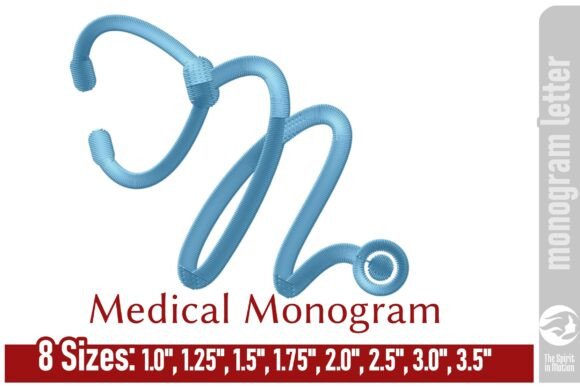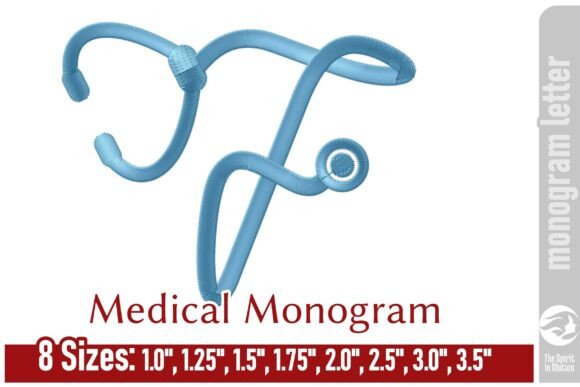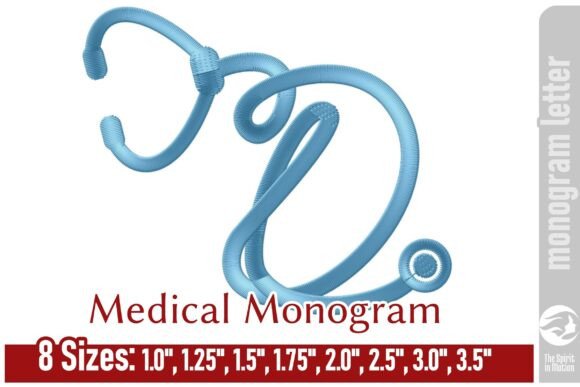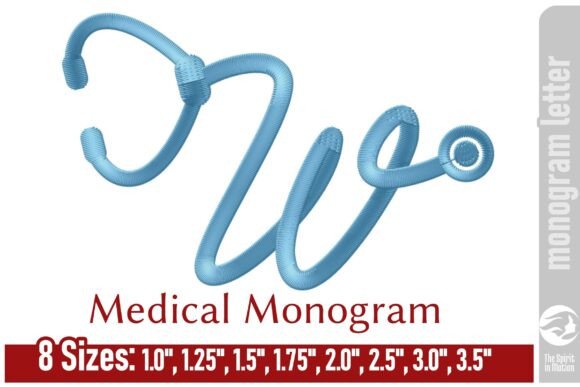
Medical Embroidery Monogram Letter - K
A Stethoscope-Shaped Monogram with Quiet Confidence
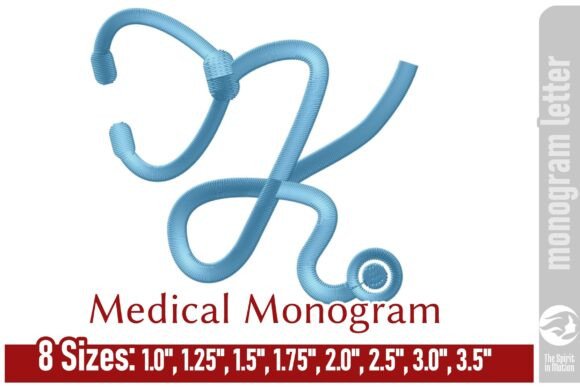
As an embroidery designer who’s stitched thousands of monograms for boutique apparel—especially in healthcare-themed collections—I opened Medical Embroidery Monogram Letter - K expecting charm, but what stood out immediately was its quiet authority. This isn’t a cartoonish stethoscope wrapped around a letter—it’s a refined monoline interpretation where the curve of the tubing flows seamlessly into the vertical stroke of the “K,” creating balance without clutter. It reads as elegant, not clinical; professional, not sterile. The line weight is consistent and intentional—neither too thin to disappear on fleece nor so bold it overwhelms petite chest placements. For small shop owners building a cohesive brand voice, this design lands somewhere between classic and contemporary: timeless enough for senior physicians’ gifts, fresh enough for Gen Z nurse entrepreneurs launching their own scrub line.
Sweatshirt & Hoodie Performance: Where Simplicity Shines
On neutral heather grey sweatshirts or soft pastel hoodies, Medical Embroidery Monogram Letter - K becomes a subtle signature—not a logo, but a statement of identity. I tested placement options: centered chest (3.2”–3.8” wide), left sleeve cuff (scaled to 2.0”), and upper back near the neckline (as part of a trio with initials M and N). All worked, but the chest placement delivered the strongest boutique appeal—clean, confident, and instantly legible at arm’s length. On oversized garments, the monoline structure holds up beautifully; no fill stitches mean zero risk of puffing or distortion across relaxed fabric tension. Unlike dense satin-stitch monograms, this design breathes on ribbed cuffs and curved shoulders, making it ideal for hoodie sleeve accents where stretch and movement are constant factors.
Beyond Scrubs: Versatility Across Boutique Merchandise
- Tote bags & pouches: Its clean silhouette translates flawlessly to cotton canvas and woven poly blends—no stitch crowding, no thread nesting in corners.
- Denim jackets: Paired with matte black or navy thread, it adds quiet sophistication without competing with hardware or fading.
- Cozy seasonal layers: On cable-knit cardigans or fleece-lined loungewear, the stethoscope-K reads as thoughtful detail—not decoration, but intention.
- Etsy listings & social graphics: Because it’s inherently narrative, it elevates printable mockups and lifestyle photos. A flat lay of a cream hoodie with Medical Embroidery Monogram Letter - K stitched in oatmeal thread feels editorial, not generic.
What Makes This Monogram Build Trust—and Value
Healthcare buyers respond to authenticity, not gimmicks. That’s why Medical Embroidery Monogram Letter - K works so well for custom apparel: it signals understanding. When a nurse sees this on a gift hoodie, she doesn’t see “just a letter”—she sees recognition. That emotional resonance lifts perceived value. For Etsy sellers and small clothing brands, that means higher conversion on listings, stronger repeat engagement, and organic word-of-mouth. Visually, it supports brand consistency across product lines—whether you’re embroidering scrubs, tote bags, or limited-run holiday loungewear. And because it’s a single-letter monogram, it avoids gendered assumptions while still feeling personal and hand-curated.
Practical Notes Every Embroidery Designer Should Check
Before stitching your first batch, treat Medical Embroidery Monogram Letter - K like any high-intent design—not just another file from your Creative Fabrica library. Here’s what I do:
- Test on scrap fabric that matches your final garment—especially important for fleece, brushed cotton, and ribbed knits where stitch pull can distort fine lines.
- Confirm stabilizer choice: A light cutaway or tear-away works best. Avoid heavy fusibles—they mute the delicate flow of the monoline shape.
- Review thread color contrast carefully. On dark garments, matte charcoal or deep navy thread reads cleaner than black. On light fabrics, heather grey or warm taupe adds depth without starkness.
- Inspect stitch density in the curves. Monoline designs can sometimes run thin in tight turns—zoom in on your embroidery software to ensure continuity before hooping.
- Compare placement options on a physical garment—not just on screen. A 3.5” chest placement looks balanced on a size medium hoodie but may feel off-center on a petite XS or oversized XL.
- Always verify licensing terms on the Creative Fabrica product page before producing finished apparel for resale. This applies whether you’re selling digitally or as a handmade product.
Where Caution Meets Craftsmanship
This design excels on stable, medium-weight fabrics—but tread thoughtfully on ultra-stretchy performance knits or highly textured surfaces like bouclé or thick terry cloth. The stethoscope curve relies on smooth fabric feed; on heavily distorted areas (like underarm seams or curved waistbands), consider using it only on flatter zones: chest, upper back, or flat pockets. Also, avoid scaling below 2.0” —the negative space within the stethoscope loop begins to close visually, losing its defining character. And while it’s built for clarity, don’t assume it’s “set-and-forget”: always test on the exact fabric blend you’ll use. A design that runs perfectly on 80/20 cotton-poly may shift slightly on 100% ring-spun cotton due to fiber grip alone.
Final Thought: A Monogram That Carries Meaning
In a market flooded with generic fonts and overused medical icons, Medical Embroidery Monogram Letter - K stands apart—not because it’s flashy, but because it’s considered. It’s the kind of machine embroidery design that makes customers pause, smile, and say, “They *got* it.” For embroidery shops building reputation, for Etsy sellers curating meaningful collections, and for boutique brands investing in visual storytelling—this isn’t just another embroidery file. It’s a quiet amplifier of identity, professionalism, and care. Use it intentionally, stitch it thoughtfully, and let it speak for the people who wear it.